If you’ve been following the electric vehicle space, you’ve probably noticed that China isn’t just the world’s largest EV market — it’s also the world’s most demanding one. Brands that thrive here earn their place every single day. Those that don’t adapt quickly find themselves facing a painful reality: warehouses full of unsold cars and dealers quietly offloading inventory at massive discounts. That’s exactly the situation Smart brand inventory challenges China reveal in vivid detail — and the story is one every premium EV player needs to understand.
So let’s dig in, explore what’s happening on the ground, and pull out the real lessons for anyone thinking about entering this remarkable, complex, and fast-moving market.
Smart Brand Inventory Challenges China: Inventory Turnover Metrics and Pricing Adjustment Analysis
The Premium EV Market China Growth Story
Before we talk about Smart’s specific challenges, it’s worth setting the stage with just how explosive — and unforgiving — the Chinese EV market has become.
China’s EV market is projected to reach approximately 377.9 billion USD in revenue in 2025. Domestic EV sales already exceeded 11 million vehicles in 2024, with market penetration reaching roughly 48% of total car sales. Let that sink in for a moment. Nearly half of every new car sold in China is now electric or plug-in. This is not a niche trend anymore — it is the new normal, and it is accelerating.
Through the third quarter of 2025, the NEV passenger vehicle segment decisively surpassed internal combustion engine vehicles, with 8.87 million NEVs sold compared to 8.14 million ICE vehicles in the same period. The crossover has happened. The question is no longer whether EVs will take over China but rather which EV brands will survive the fierce competition that follows.
And the competitive pressure is extraordinary. Foreign automakers have surrendered 33 percentage points of domestic market share since 2020. By the third quarter of 2025, local Chinese brands seized approximately 69% of passenger vehicle shipments, capturing every single unit of year-over-year market growth. The dynamics are blunt: when the market grows, a Chinese brand takes the gain. When it shrinks, a foreign brand absorbs the loss.
For any premium EV entrant — whether a legacy European name reinventing itself or a new joint venture — this macro picture is the backdrop against which every inventory decision, every pricing call, and every product launch plays out.
Professional Web Development and SEO Services
Smart Brand Positioning in China
Smart is not your average car brand. Born in Europe as the maker of tiny, quirky city cars, Smart was reinvented in 2019 as a joint venture between Mercedes-Benz and Geely, China’s largest private automaker. The new Smart became an EV-only brand, built on Geely’s Sustainable Experience Architecture platform — the same advanced EV foundation that underpins the Zeekr X, Volvo EX30, Lotus Eletre, and Polestar 4.
On paper, the formula looked convincing. You combine the premium cachet of Mercedes-Benz with Geely’s deep manufacturing expertise and supply chain mastery. You build stylish, design-forward electric vehicles aimed at urban, tech-savvy consumers who want something distinctive and aspirational. You launch in China first, then use it as a springboard for Europe and beyond.
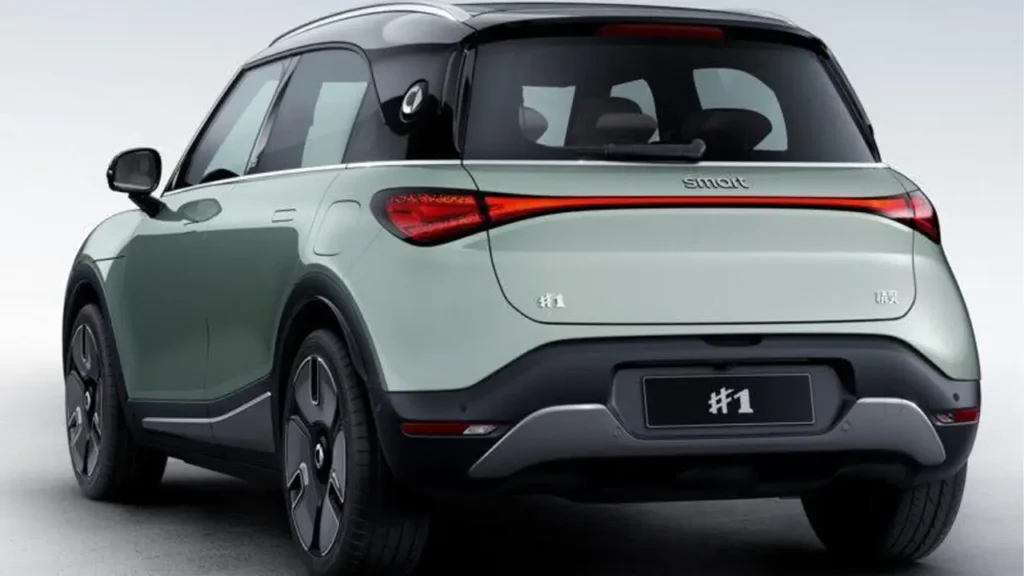
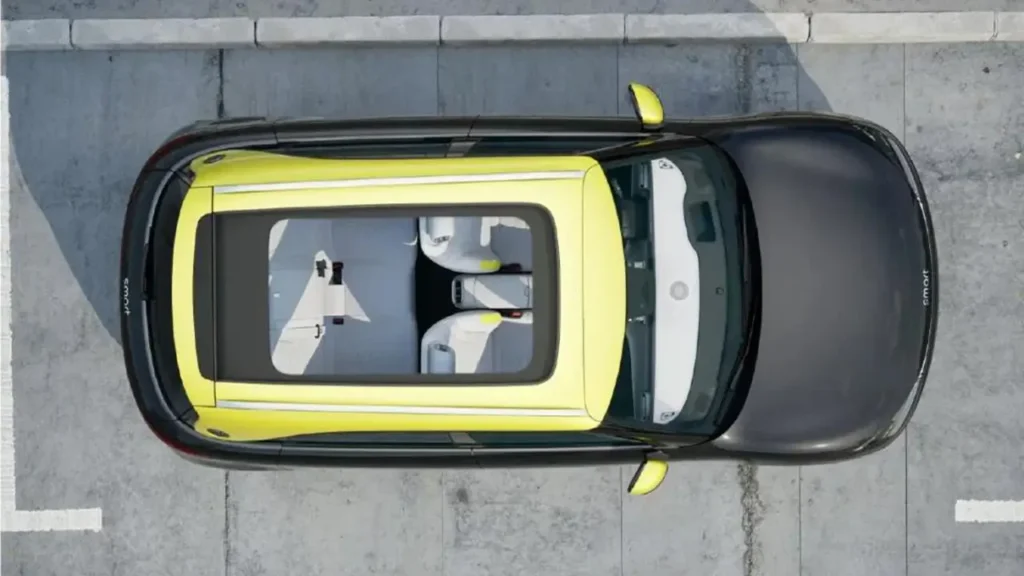
The Smart #1 — a compact electric crossover — launched in China in June 2022. It was followed by the larger Smart #3 coupe SUV in mid-2023, and later by the flagship Smart #5. Mercedes-Benz designed the exteriors, lending that premium, European aesthetic that the brand was hoping to convert into pricing power. The vehicles were built on cutting-edge technology, certified by globally recognized battery suppliers, and positioned squarely in the premium urban EV segment.
So what went wrong? The answer lies in the Smart brand inventory challenges China presents to any brand that misreads consumer demand, product-market fit, and the relentless pace of local competition.
Dealer Stock Pressure and Inventory Buildup
Here is where the story gets really instructive. According to data from the China Association of Automobile Manufacturers and the Passenger Car Association, Smart sold approximately 29,986 new vehicles in the 12-month period from March 2025 to February 2026. That is a modest figure by China’s standards, where top-performing EV models routinely sell that many units in a single month.
More revealing than the total number is how those sales were distributed across models. The Smart #1, the smallest and longest-running model in the lineup, accounted for approximately 64% of all Smart sales in that period. The Smart #3 contributed just 14%, and the Smart #5 — the brand’s flagship, most heavily marketed, and most expensive model — managed only 22% of the total. In absolute terms, the larger models were barely moving.
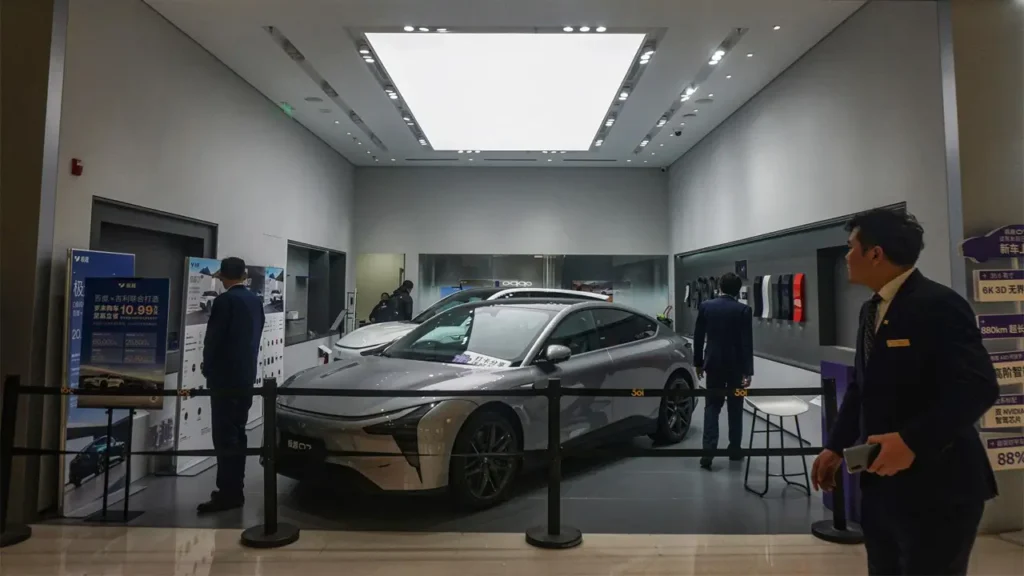
The consequences of slow-moving inventory were severe and very public. Brand-new, unregistered Smart #5 vehicles began appearing on used car platforms in cities like Chongqing at prices drastically below the official manufacturer’s recommended retail price. The official price for the Smart #5 long-range luxury version stood at 269,900 yuan — approximately 39,100 USD. These units were being sold at just 169,800 yuan, or around 24,600 USD. That is a markdown of 100,000 yuan — roughly 14,500 USD — on a vehicle that had never been registered to an owner.
Dealers were essentially absorbing massive losses to clear stock. They were not selling used cars — they were liquidating new inventory through used-car channels because it was the only viable exit. For the Smart brand, this kind of public discounting is deeply damaging. It tells prospective buyers that the official price cannot be trusted, that the residual value of the vehicle will be poor, and that the brand’s premium positioning is fragile.
This is the core mechanics of EV inventory turnover China challenges — when units do not sell at the rate the manufacturer intended, the downstream pressure on dealers becomes unbearable, and the brand’s image takes collateral damage.
Advanced Polymer Engineering Solutions

Discover modern polymer technologies, industrial materials, and engineering solutions designed for high-performance manufacturing and innovative industries.
Visit Polimerukr.com →
EV Inventory Turnover China Metrics and Why They Matter
Inventory turnover — how quickly a dealership sells through its stock — is one of the most critical health indicators in the automotive retail sector. A healthy inventory turnover for a premium EV in China sits around 45 to 60 days. When turnover stretches beyond 75 to 90 days, dealers begin to feel significant cash-flow strain. When it extends further, the situation becomes critical.
For context, China’s broader EV price war has been raging for several years. The Chinese government itself has pledged to tighten regulation on what it officially describes as “irrational competition” in the EV sector, recognizing that extreme discounting erodes dealer profitability and disrupts market pricing expectations. Industry analysts have noted that even well-intentioned manufacturer policies to clear dealer inventory can backfire severely — eroding dealer profits, disrupting pricing benchmarks, and leaving consumers who paid full price feeling short-changed.
This is not a Smart-specific problem in isolation. It is a structural challenge in premium EV market China dynamics. However, the Smart brand has been hit particularly hard because its product strategy amplified rather than mitigated the risk. Instead of doubling down on the product that resonated with Chinese consumers — the compact, city-appropriate Smart #1 — the brand pursued a deliberate upward-sizing strategy, introducing progressively larger and more expensive models with each new launch.
The Smart #3 was longer, heavier, and positioned higher than the #1. The Smart #5 was larger still. And according to regulatory filings, the upcoming Smart #6 will be larger than the #5 — a plug-in hybrid sedan approaching five meters in length with a wheelbase of 2,926 mm, making it the longest vehicle in Smart’s history. This is a brand founded on the idea of the city car preparing to compete in the 200,000 to 300,000 yuan segment against the Xiaomi SU7 and Tesla Model 3 — two of the most dominant and well-entrenched models in all of China.
Meanwhile, the Smart #1 — the actual bestseller — has received four iterative updates since its June 2022 launch, but these have been primarily price reductions and minor configuration tweaks rather than meaningful advances in battery technology, charging capability, or driver assistance features. The 2026 Smart #1 still supports the same 150 kW maximum fast-charging speed as the 2022 version, while comparable competitors built on the same SEA platform, such as the Lynk and Co Z20, now support up to 300 kW fast charging. In a market where technology progresses this quickly, standing still is functionally moving backward.
Pricing Adjustments and Discount Strategies
The pricing situation Smart faces in China illustrates a broader truth about EV dealership challenges China presents: discounting is a double-edged sword.
China’s automotive market is caught in an escalating price competition, but steep discounts have yielded only marginal sales growth across the industry. McKinsey’s comprehensive 2025 consumer survey of nearly 2,500 Chinese automotive buyers found that automakers may find more success competing through innovation than through relentless price cuts. Chinese consumers are actively embracing new models and cutting-edge technologies — they respond to value, but they define value primarily through product quality, technology, and brand trust rather than through price alone.
For Smart, the gap between official pricing and dealer-level discounting has undermined brand trust at a critical stage. When a vehicle listed at 269,900 yuan can be negotiated down to 169,800 yuan — or lower with trade-in incentives — the signal to the market is damaging. Consumers who read these reports become reluctant to commit at any price level, knowing that patience will likely be rewarded with deeper discounts. This creates a self-reinforcing cycle that stalls EV inventory turnover China metrics further.
The smart — and intentional — play for premium EV brands is price stability, supported by genuine product differentiation. The most successful players in China’s premium EV segment have managed this by ensuring their technology genuinely justifies the price point, creating perceived value that consumers feel cannot wait.
Comparison with Competitors: Zeekr X and MINI Electric
To understand just how difficult Smart’s position is, it helps to look at how comparable vehicles are performing in the same premium urban EV segment.
| Model | Base Price (EUR) | Inventory Turnover (Days) | Dealer Sentiment | Market Position |
|---|---|---|---|---|
| Smart #1 | €38,000 | 75–90 | Weak | Premium Urban EV |
| Zeekr X | €42,000 | 45–60 | Positive | Performance EV |
| MINI Electric | €36,000 | 60–75 | Neutral | Lifestyle EV |
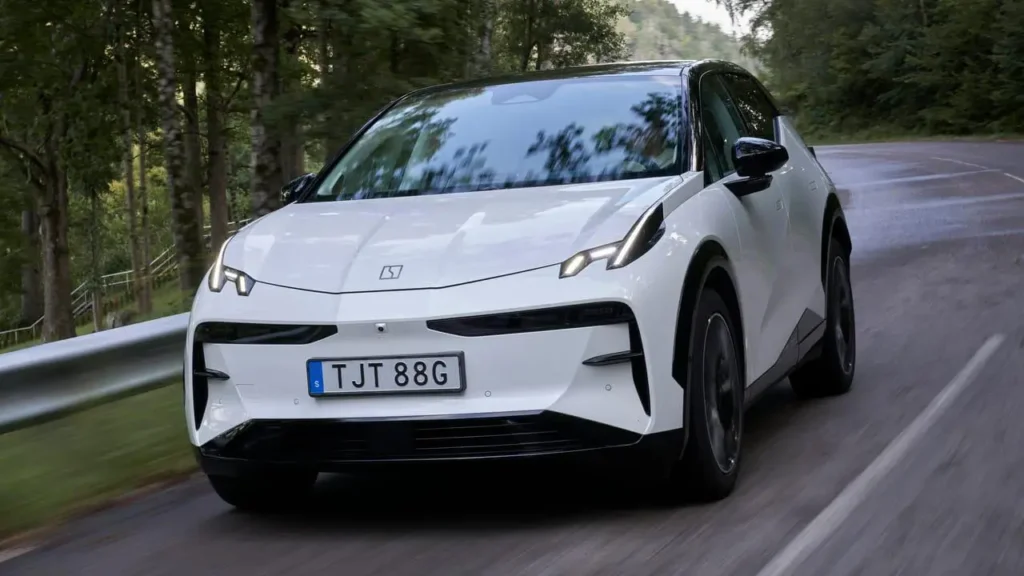
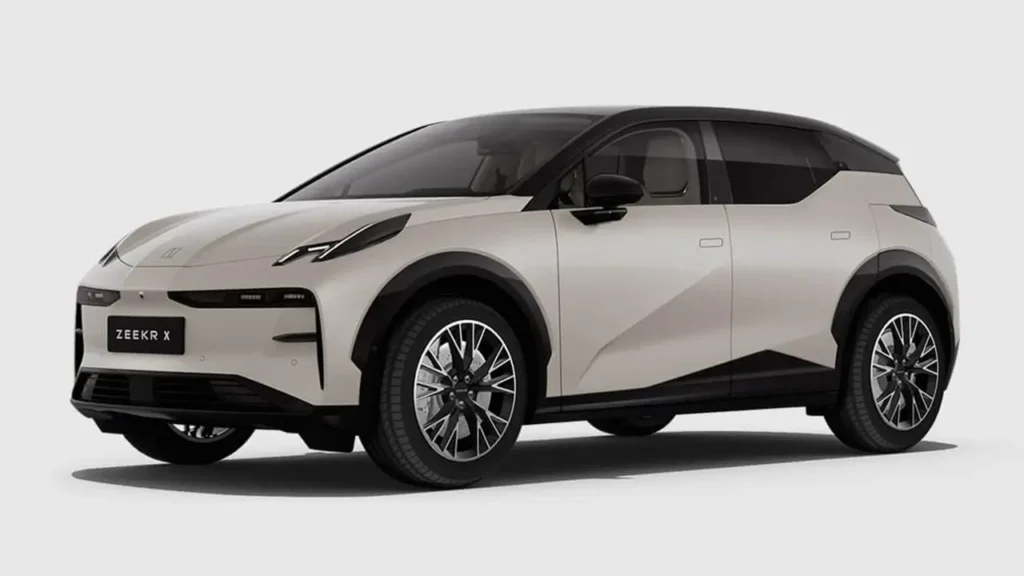
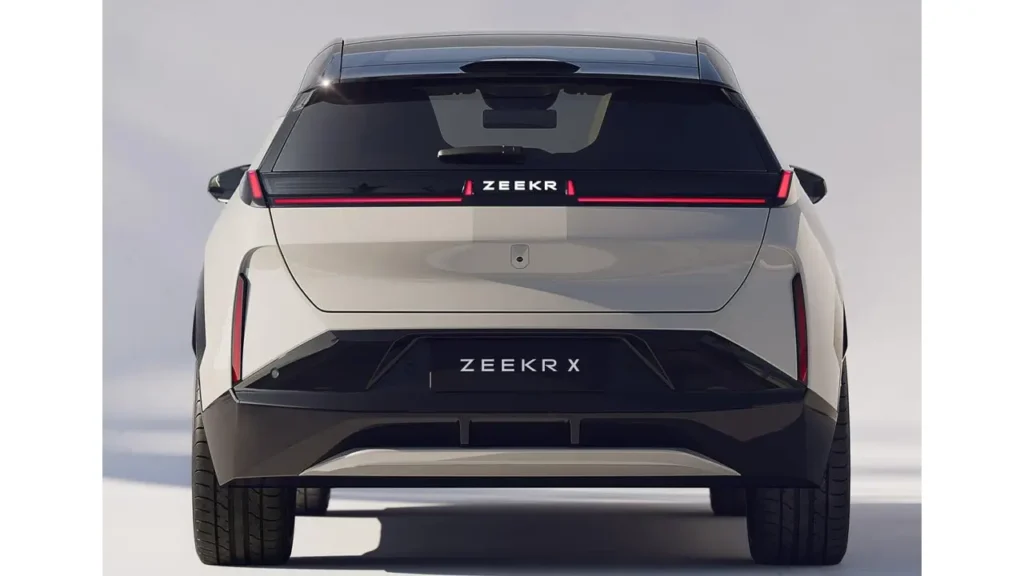
The Zeekr X is perhaps the most instructive comparison. Also built on Geely’s SEA platform — the exact same technological foundation as the Smart #1 — the Zeekr X has delivered superior inventory turnover and stronger dealer sentiment. Why? Because Zeekr has aggressively updated the X’s technology package, invested heavily in its smart driving and connectivity features, and positioned the vehicle as a performance-oriented, tech-forward product for digitally native Chinese consumers. The brand understands that in this market, what the car can do with software matters as much as what it does with hardware.
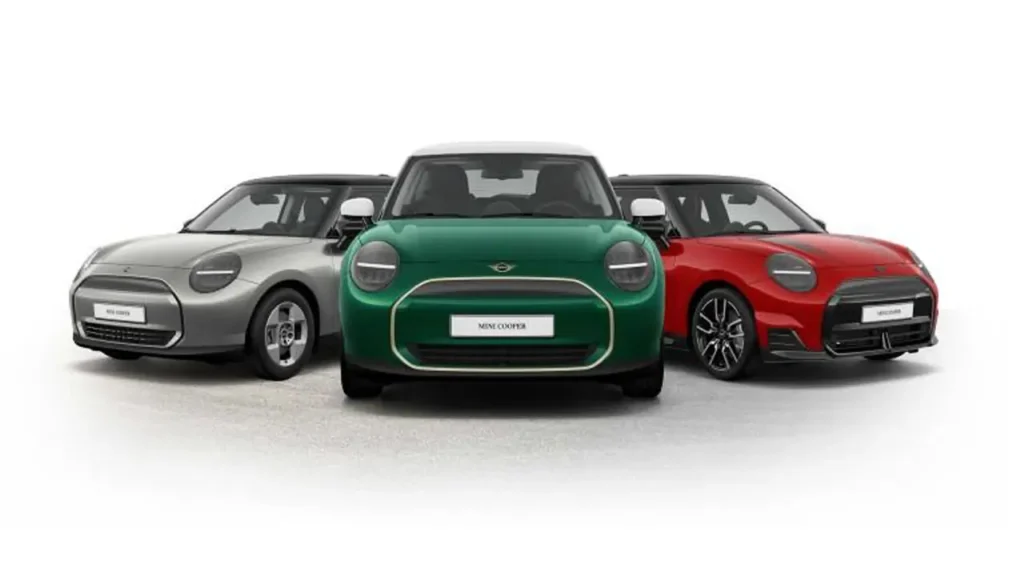
MINI Electric, produced by a BMW-Great Wall joint venture in China, occupies a lifestyle position similar to Smart’s original European identity. The MINI Electric has maintained more moderate but stable dealer sentiment. It benefits from a cult following and consistent brand identity, but even it faces the same macro headwinds that all non-Chinese premium brands confront in the current environment.
The common thread across both comparisons is brand consistency. Both Zeekr and MINI Electric have maintained a clear product identity in the minds of Chinese consumers. Smart’s pivot toward larger vehicles — abandoning the compact city-car DNA that originally defined the brand — has created market confusion rather than market expansion.
EV Dealership Challenges China Insights
What the Smart case study reveals about EV dealership challenges China presents is worth cataloguing carefully, because these dynamics affect any brand operating in this space.
First, product-market fit matters more than brand heritage. Chinese OEMs have earned consumer recognition primarily through technology innovation. Legacy foreign brands are still perceived as premium in some segments, but many are struggling to convert that legacy appeal into actual pricing power for electric vehicles. Reputation built during the internal combustion engine era does not automatically transfer to the EV era. Chinese consumers are evaluating EVs on a fresh set of criteria: smart features, charging speed, over-the-air software updates, and ecosystem integration.
Second, dealer financial health is a leading indicator of brand health. When dealers lose money on inventory — whether through forced discounting, slow turnover, or both — they become reluctant to stock vehicles, reluctant to invest in showroom quality, and reluctant to advocate for the brand to prospective buyers. The downstream effect of poor inventory management is a deteriorating retail experience, which further suppresses demand.
Third, the used-car platform problem is uniquely acute in China. Chinese consumers are highly digitally connected and extremely price-aware. When brand-new vehicles appear on resale platforms at steep discounts, that information spreads rapidly through social media and automotive communities. The transparency is both a strength of the Chinese market — consumers are well-informed — and a vulnerability for brands managing inventory pressure.
Fourth, overcapacity is a structural issue. Analysts have noted a persistent mismatch between installed production capacity and actual consumer demand across China’s EV sector, especially as the market shifts rapidly from ICE to electric. This imbalance means that tactical price cuts, while sometimes discouraged by regulators, remain practically inevitable for brands under sales pressure.
Smart Brand Inventory Challenges China: Lessons for Other Brands Entering Competitive Segments
If you are a premium EV brand looking at China — or any competitive EV market globally — the Smart brand inventory challenges China illustrate offer a practical set of lessons worth internalizing.
The first and most important lesson is: lead with your bestseller, not your most ambitious product. Smart’s #1 model consistently outperforms every larger sibling. It accounts for 64% of brand sales despite being the least promoted and most basic model in the range. The product-market fit for a compact, distinctive, premium urban electric vehicle clearly exists. The strategic error was diverting development resources toward increasingly large vehicles that Chinese consumers did not ask for, at price points where the competition is brutally strong.
The second lesson is: technology investment is not optional. In China’s EV market, standing still on technology is the same as falling behind. The Smart #1’s charging capability has not improved meaningfully since launch, while competitors on the same hardware platform have moved significantly forward. Chinese consumers notice. They compare specifications, they read reviews, and they talk to each other online. A premium price demands premium technology, not just premium design.
The third lesson is: pricing discipline builds brand equity. The temptation to clear slow-moving inventory through public discounts is understandable, but the long-term cost is brand erosion. Premium EV brands need to manage production volumes tightly enough that discounting never becomes necessary. Better to produce fewer vehicles and sell them at full price than to flood the market and trigger a race to the bottom.
The fourth lesson is: understand what your brand means to local consumers. Smart meant something specific: clever, compact, urban, European. Chinese consumers who bought Smart #1 vehicles did so because that identity resonated with them. Expanding into larger segments requires an entirely different consumer pitch — and in a market where established domestic brands like Xiaomi, Li Auto, and Zeekr are already entrenched with strong technology stories, that pitch is an uphill battle.
The fifth lesson, and perhaps the most encouraging: there is a path forward. Smart appears to be recognizing the scale of the challenge. According to Smart’s Global CEO, the upcoming Smart #2 will return to the brand’s compact roots, featuring a two-seat design built on a new all-electric platform, with both hardtop and convertible versions planned. This represents a potential course correction — a return to what made Smart distinctive in the first place. If executed well, with meaningful technology upgrades and competitive pricing, it could help rebuild dealer confidence and consumer demand.
EV Pricing Strategy China and the Broader Market Context
It’s worth zooming out briefly to appreciate just how quickly the Chinese EV market is evolving even as Smart works through its challenges.
NEV shipments in China reached 12.94 million units in just the first ten months of 2025, already surpassing the full-year 2024 record. The market is growing fast, and the technology is improving even faster. Intelligent driving features — once the exclusive domain of top-tier brands — are being rapidly democratized across price segments, with legacy automakers and startups alike racing to offer advanced driver assistance as standard equipment.
The Chinese government is actively managing some of the worst excesses of the price war, pledging to tighten rules on irrational competition and stabilize market pricing. A new 5% vehicle purchase tax is also creating a natural demand pull before year-end. These factors suggest that the market, while intensely competitive, is not without structure — and that brands able to position themselves correctly can still find sustainable growth.
For premium EV entrants from outside China, the window is narrowing but not yet closed. The winning formula, according to industry analysis, is a globalized platform combined with genuinely localized scenarios — because there is no one-size-fits-all solution in the smart EV era.
Conclusion: Strategy for Sustainable Market Entry
Smart brand inventory challenges China reveal something that goes beyond one joint venture’s product missteps. They illuminate the structural demands of the world’s most competitive EV market — a market where technology moves faster than most brands can adapt, where consumers are exceptionally well-informed, and where inventory mismanagement becomes a public crisis almost overnight.
The good news is that the lessons are learnable and the market remains enormous. China’s premium EV segment is real, growing, and reachable — as evidenced by the continued strong performance of the Smart #1 among its loyal buyer base, and by the success of Zeekr’s technology-forward positioning.
For any brand evaluating its China EV strategy, the Smart story is not a cautionary tale about giving up on the market. It is a very useful lesson about respecting the market. Lead with your strongest product. Invest relentlessly in technology. Protect your brand through pricing discipline. And above all, listen to what Chinese consumers are actually buying — rather than assuming they will follow wherever a brand decides to lead.
The electric vehicle opportunity in China is generational. The brands that approach it with humility, agility, and genuine respect for the consumer will find it rewarding. Those that do not will find their inventory on a used-car platform at half the recommended price.
And in China’s EV market, that story travels fast.
Discover more from AutoChina
Subscribe to get the latest posts sent to your email.